You can return a range of characters by using the slice syntax. Specify the start index and the end index, separated by a colon, to return a part of the string.
Stringslicing in Python is a way to get specific parts of a string by using start, end and step values. It’s especially useful for text manipulation and data parsing.
Whether you’re building on PythonStrings or String Indexing, mastering slicing is crucial for efficient text handling. Let’s dive into Pythonstringslicing and learn how to use it with confidence.
Whether you're working on text processing, data analysis, or web scraping, understanding how to slicestrings can greatly simplify your tasks. In this blog post, we'll explore the fundamental concepts of Pythonstringslicing, its usage methods, common practices, and best practices.
Whether you're parsing user input, processing text files, or working on natural language processing tasks, understanding stringslicing is essential. In this blog post, we'll explore the fundamental concepts of stringslicing in Python, its usage methods, common practices, and best practices.
PythonStringslicing is a way of creating a sub-string from a given string. In this process, we extract a portion or piece of a string. Usually, we use the slice operator " [ : ]" to perform slicing on a PythonString. Before proceeding with stringslicing let's understand string indexing.
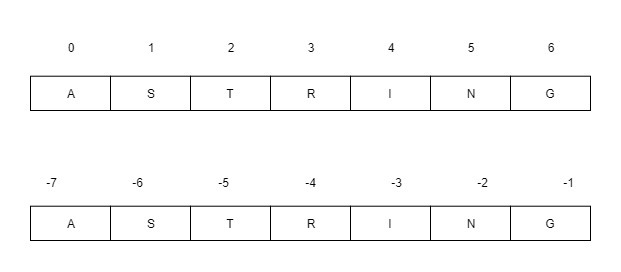 String slicing in Python is a way to get specific parts of a string by using start, end and step values. It’s especially useful for text manipulation and data parsing.